

Ensuring the stability of a catering food trailer when parked is crucial for the safety of the equipment, the well - being of the staff, and the overall success of your mobile food business. As a catering food trailer supplier, I've witnessed firsthand the importance of proper stabilization techniques. In this blog post, I'll share some key strategies to help you keep your food trailer steady and secure.
Selecting the Right Parking Spot
The first step in ensuring trailer stability is choosing an appropriate parking location. Look for a flat and level surface. Even a slight incline can cause the trailer to shift or become unbalanced. Use a bubble level to check the ground's flatness before parking. If you're at an event where finding a perfectly level spot is challenging, you can use leveling blocks. These blocks can be placed under the trailer's wheels to create a more even base.
Avoid parking on soft or unstable ground such as sand, mud, or freshly dug earth. Soft ground can sink under the weight of the trailer, leading to instability. If you have no other option but to park on soft ground, consider using large, heavy - duty plywood sheets under the trailer's support points to distribute the weight more evenly.
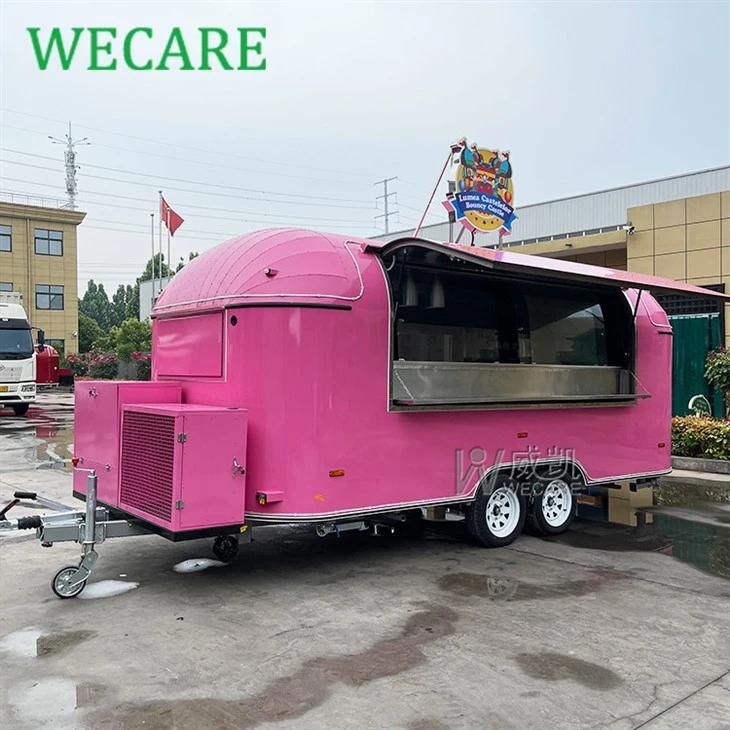

Utilizing Trailer Jacks
Trailer jacks are essential tools for stabilizing a catering food trailer. Most trailers come equipped with two types of jacks: tongue jacks and stabilizer jacks.
The tongue jack is located at the front of the trailer, near the hitch. It is used to raise and lower the front end of the trailer. When parking, extend the tongue jack until it firmly touches the ground. Make sure it is adjusted to the correct height so that the trailer is level from front to back. A properly adjusted tongue jack helps to prevent the trailer from tipping forward or backward.
Stabilizer jacks are usually located at the rear and sometimes at the sides of the trailer. These jacks are designed to provide additional support and prevent the trailer from swaying or rocking. After parking, lower the stabilizer jacks until they make firm contact with the ground. Tighten the jacks securely to ensure they hold the trailer in place. Some advanced stabilizer jacks come with locking mechanisms that provide extra stability.
Wheel Chocks
Wheel chocks are simple yet effective devices for preventing a parked trailer from rolling. Place wheel chocks on both sides of the trailer's wheels, especially if the trailer is parked on a slight incline. Make sure the wheel chocks are the appropriate size for your trailer's wheels and are made of a durable material. They should be firmly wedged against the wheels to prevent any movement.
Anchoring Systems
For added stability, especially in areas prone to strong winds or in high - traffic locations, consider using an anchoring system. There are various types of anchoring systems available in the market, such as ground anchors and tie - down straps.
Ground anchors can be screwed or hammered into the ground. They are then attached to the trailer using strong straps or chains. This helps to keep the trailer firmly in place and prevents it from being blown away by strong winds or being moved by external forces. Tie - down straps can also be used to secure the trailer to nearby fixed objects, such as poles or posts.
Regular Maintenance
Regular maintenance of your catering food trailer is essential for ensuring its long - term stability. Check the trailer's frame, jacks, wheels, and other components regularly for signs of wear and tear. Make sure all bolts and nuts are tightened properly, as loose components can lead to instability.
Inspect the tires for proper inflation and tread depth. Under - inflated tires can cause the trailer to sag and become unstable. Replace any worn - out or damaged tires immediately.
Aerodynamics Considerations
The design of the catering food trailer can also affect its stability when parked. Consider the trailer's shape and how it interacts with the wind. A trailer with a large, flat surface area on the side may be more susceptible to wind forces. You can install windbreaks or awnings on the trailer to reduce the impact of the wind. These accessories not only provide shade for customers but also help to deflect the wind and improve the trailer's stability.
Interior Equipment Placement
The way you arrange the equipment inside the catering food trailer can also impact its stability. Heavy equipment such as ovens, refrigerators, and generators should be placed as low as possible and close to the center of the trailer. This helps to lower the trailer's center of gravity and makes it more stable. Avoid placing heavy items on one side of the trailer, as this can cause the trailer to tilt.
Now, as a catering food trailer supplier, we offer a wide range of high - quality trailers to meet your business needs. For example, our Airstream Pizza Trailer is perfect for pizza vendors, with a well - designed interior and a stable structure. Our Airstream Catering Van provides a spacious and functional workspace, and our Food Van Trailer is a versatile option for various types of food businesses.
If you're interested in learning more about our catering food trailers or need advice on trailer stability, feel free to get in touch with us. We're here to help you make the best choice for your mobile food business.
References
- Trailer Safety Handbook, National Trailer Manufacturer's Association
- Mobile Food Business Guide, Small Business Administration