

Can a stage trailer be towed by a regular vehicle?
As a stage trailer supplier, I often get asked whether a stage trailer can be towed by a regular vehicle. This is a crucial question for many clients who are looking for a cost - effective and convenient way to transport their stage trailers. In this blog, I'll delve into the various aspects of this issue, including the capabilities of regular vehicles, the characteristics of stage trailers, and the legal requirements involved.
Understanding Regular Vehicles
First, let's define what a "regular vehicle" is. Generally, it refers to passenger cars, SUVs, and light - duty pickup trucks that are commonly used for daily commuting and personal transportation. These vehicles come with different engine sizes, towing capacities, and drivetrain configurations.
The towing capacity of a regular vehicle is determined by several factors. The engine power is a primary one. A vehicle with a larger and more powerful engine can typically tow more weight. For example, a full - size SUV with a V8 engine will have a higher towing capacity compared to a compact car with a four - cylinder engine. Transmission also plays a role. Vehicles with heavy - duty transmissions are better equipped to handle the stress of towing. Additionally, the suspension system needs to be robust enough to support the additional weight without compromising the vehicle's stability.
Most regular passenger cars have a relatively low towing capacity, usually ranging from 1,000 to 3,500 pounds. Compact SUVs can tow between 1,500 and 5,000 pounds, while full - size SUVs and light - duty pickup trucks can handle up to 10,000 pounds or more in some cases.
Characteristics of Stage Trailers
Stage trailers come in a wide variety of sizes and weights. Smaller, portable stage trailers designed for local events or small performances may weigh as little as 1,000 pounds. These trailers are often used for community gatherings, small band performances, or promotional events.
On the other hand, larger, more elaborate stage trailers used for large - scale concerts, festivals, or corporate events can be extremely heavy. They may include features such as built - in sound systems, lighting rigs, dressing rooms, and large stages. These heavy - duty stage trailers can weigh anywhere from 5,000 to 20,000 pounds or even more.

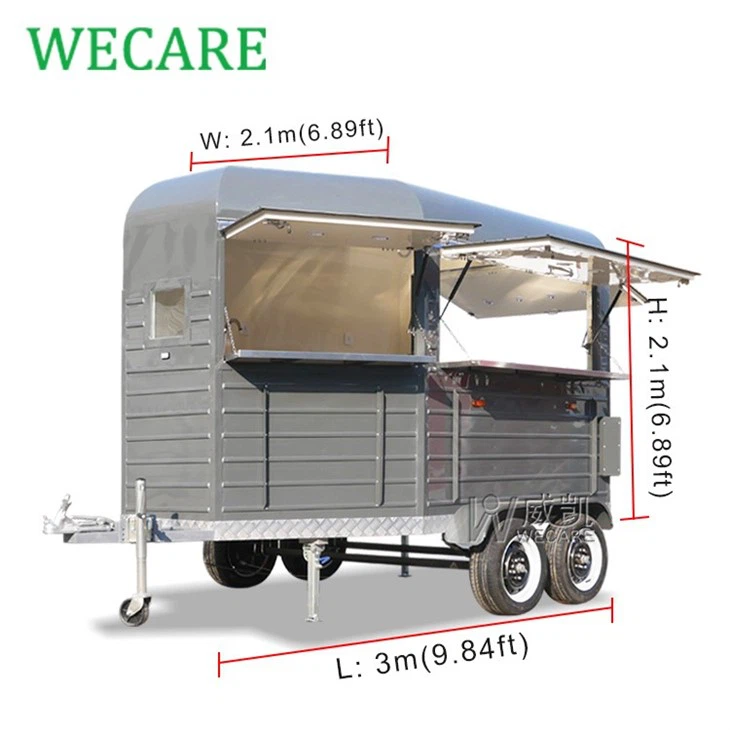
The weight of the stage trailer is not the only factor to consider. The trailer's length, width, and height also impact its towability. Longer trailers can be more difficult to maneuver, especially when making turns or backing up. Wide trailers may require special permits in some areas, and tall trailers can affect the vehicle's center of gravity and stability.
Compatibility between Regular Vehicles and Stage Trailers
Based on the towing capacities of regular vehicles and the weights of stage trailers, it's clear that only the smallest stage trailers can potentially be towed by regular vehicles. A small, lightweight stage trailer weighing around 1,000 - 3,000 pounds might be within the towing capacity of some compact SUVs or light - duty pickup trucks.
However, even if the weight is within the vehicle's towing limit, there are other important considerations. The trailer hitch is a critical component. A regular vehicle must be equipped with a proper hitch that is rated for the weight of the stage trailer. There are different types of hitches, such as ball hitches and fifth - wheel hitches, and the correct one must be selected based on the trailer's design.
Another aspect is the braking system. Many stage trailers, especially the heavier ones, are equipped with their own braking systems. When towing a trailer with brakes, the regular vehicle must have a brake controller installed. This device allows the vehicle's brakes to communicate with the trailer's brakes, ensuring safe and effective stopping.
Legal Requirements
Towing a stage trailer with a regular vehicle is also subject to various legal requirements. In most regions, there are laws regarding towing capacity. It is illegal to tow a trailer that exceeds the vehicle's rated towing capacity. This is not only a safety issue but also a violation of traffic laws.
Some areas require special licenses or permits for towing trailers, especially if they are large or heavy. For example, if the combined weight of the vehicle and the trailer exceeds a certain limit, the driver may need a commercial driver's license (CDL). Additionally, there are regulations regarding trailer lighting, reflectors, and safety chains. These requirements are in place to ensure the safety of the driver, passengers, and other road users.
Our Offerings and Alternatives
As a stage trailer supplier, we understand the diverse needs of our clients. We offer a range of stage trailers, from small, portable ones that might be towable by a regular vehicle to large, heavy - duty trailers for major events. If you are considering using a regular vehicle to tow a stage trailer, we can help you select the right trailer that fits within your vehicle's towing capacity.
However, for larger stage trailers, we also recommend considering commercial towing options. Professional towing companies have the experience, equipment, and knowledge to safely transport heavy and large - scale stage trailers. They are well - versed in the legal requirements and can ensure that the transportation process is smooth and hassle - free.
In addition to stage trailers, we also offer other types of trailers, such as Mobile Dog Wash Trailer, Horse Trailer Coffee Cart, and Coffee Shop Horse Trailer. These trailers are designed for specific purposes and can be customized to meet your unique needs.
Contact Us for Procurement
If you are interested in purchasing a stage trailer or any of our other trailers, we encourage you to contact us. Our team of experts can provide you with detailed information about our products, help you determine the best trailer for your needs, and answer any questions you may have about towing and transportation. Whether you are a small event organizer or a large - scale production company, we are here to assist you in finding the perfect trailer solution.
References
- "Towing Capacity Guide." AAA.
- "Trailer Towing Laws in the United States." National Highway Traffic Safety Administration.
- "Understanding Trailer Braking Systems." Trailer Life Magazine.